Thursday, 5 October 2017

Renault’s enduring Clio seeks to endear in its latest form


Mid-life refreshers are de-rigueur across the new car scene, writes Iain Robertson, and most involve little more than updated lamps and handles, although improving a model that is already sound can be a tough job.
The model life cycle is a crucial consideration in the modern motor industry. In fact, it is such a vital aspect in new car design that its timing is something planned into what is a highly competitive market. Even rival manufacturers will attempt to wheedle out from each other, over a series of departmental lunches that involve sales, marketing, design and engineering personnel gathering information by the most devious means, to ensure that product launches obtain the maximum amount of ‘free space’. These are spy games par excellence.

The days of creating automotive icons, a word that I truly loathe, mainly because it is bandied about by indolent, phone-tapping youths, who simply know no better, while not exactly long gone, is a potential treasure trove that few carmakers have struck in recent times. One of the last of them was probably the Volkswagen Beetle, which coursed through its life with minimal variation for nigh on 65 years. They don’t make ’em like that any more (and some would thank the Good Lord for small mercies).
Yet, verging close to that description is the Renault Clio, a model that has been a mainstay of the French carmaker’s line-up since 1990 but has endured just four major iterations over that time, with each version lasting for around eight to nine years, with at least one mid-life upgrade enhancing the retail proposition to each of the Marks. The Mark Four Clio I have on test has just undergone its re-adjustment plan, so you know that it will take around four to five years before it is replaced more comprehensively.

When this model emerged in 2012, it was the first of the non-Le Quement designs for a number of years. The company’s former design boss, famous for the ‘shaking that ass’ Megane, had been sacked ignominiously in the previous year. Laurens van den Acker, who had been coaxed from Mazda to join Renault, took on the task of gifting fresh inspiration to the Clio and anyone, who recognised his design signature, would have spotted it, not least in the launch Flame Red colour, a version of which he had already applied to Mazda concept cars previously and remains a £625 extra charge item on this test example.
While the days of ‘Nicole and Papa’, who were central to the advertising transition of the first Clio, from the former Renault Five, in 1990, are but a distant memory, largely unknown to today’s 20-somethings, it is the car itself that has become the focal attention. Intentionally voluptuous, with well-defined haunches and sensual ‘curviness’ in abundance, it sold in excess of an outstanding 400,000 examples worldwide in 2015, a result that highlights its popularity.

It remains a particularly attractive design, which makes mid-life revisions surprisingly difficult for the styling team. Yet, Renault has managed to retain its image and vitality, without detracting too far from the original. However, it is clear that a bag of additional safety enhancements, for which Renault has usually been an innovator, will have to wait for the Mark Five to arrive. As a result, this version of the Clio is devoid of distance cruise control, semi-autonomous emergency braking and even lane control, equipment that most of its rivals now incorporate.
While I am not unhappy about these omissions, asking £18,240 for a 900cc five-door hatchback is a rich price tag that will take some justification on Renault’s part. I should point out that £1,000 of that price is for the Renault R-Link multimedia system that includes front, rear and lateral sensors, a rear parking camera and a hands-free, parallel and perpendicular parking aid. The additional tinted rear glazing costs £250, while the get-you-home spare wheel adds £100. I have already mentioned the premium charged for the paint job, added to the £16,265 base price. Renault needs to be careful, even in these days of very few punters renting, rather than actually ‘owning’ their cars, that it does not price itself out of contention. It is dangerous territory.

Having enjoyed personally a bumper period of sampling virtually every one-litre triple power unit from the motor industry, Renault’s alternative may be 10% smaller than the norm but it is no less vibrant. Developing a turbocharged 90bhp and driving through a five-speed manual transmission, it is pretty much average for the class. It emits a modest 105g/km, which is a tad more than most of its rivals, but it does boast a top speed nudging 113mph and can crack the 0-60mph benchmark in a whisker off 12.0 seconds, again, up to the class average.
Sadly, as the test car seemed to have a hair-trigger throttle, even attempting to hold a steady speed, whether through town, or out on the main roads, it was too frustrating on our bumpy, potholed road surfaces to be anything less than staccato, accompanied by plenty of glottal stops, as Clio sung its otherwise pleasant song. Thankfully, a smooth ride quality, a long-held benefit of French motorcars, is retained in this Dynamique S TCe model, because, were it any less resilient, the resultant, bump-induced throttle surge would have been intolerable. In some respects, it felt as though the engine’s ignition timing was too advanced, as kicking in the turbocharger occurred rather too easily.

Interestingly, this showed up in the average fuel return of the test period. Even equipped with ‘stop:start’ technology, its 60.1mpg posted Official Combined figure is someway off the actual. On my customary 50-miles test route, the Clio gave a moderate 49.7mpg measured brim-to-brim. However, driving like that is not really feasible in daily traffic, where it was a less frugal 43mpg, almost a third less than the posted figure, which is not a good reason to contemplate a Clio TCe 90.
However, it is a comfortable wee thing, offering plenty of space for two six-footers up-front, although those behind will suffer a degree of discomfort. Both driver’s seat and the steering column offer a wide range of adjustment. The ‘soft-touch’ dashboard, with its technical finish, looks and feels very presentable and, being devoid of banks of switches, as most of the minor controls are accessed via the R-Link touch-screen, the design is clean and unencumbered. In this respect, the Clio is a charming sub-compact.

In this trim, it is also quite well-equipped. On the technical front, it features both stability and traction controls, as well as a brake pedal-induced hill-start assist. In typical Renault form, a card-type key can be either kept in the pocket, or introduced to an appropriate slot in the lower dashboard, alongside the pushbutton starter. Walk away from the Clio and its locks its doors automatically. The car’s headlamps can illuminate automatically, just as rain-sensing wipers will clear the screen without driver intervention. The new double-optic headlamps provide a strong pool of light ahead of the car at night-time, offering decent range on full-beam.
The 17-inch, black and alloy wheels look great, offset by the black and chrome-lipped sill extensions and the rear diffuser built into the back bumper, which adds a soupçon of sportiness to an otherwise rudimentary machine. This subtle edge is carried into the interior, where the cloth covered seats feature grey and red leatherette inserts for added interest.

Overall, the latest version of the Clio is not majorly altered over its original outline, which means that Renault must be raking in the profits for a most durable piece of design. It is covered by a four years/100,000 miles manufacturer’s warranty and servicing packages (typically being £459 for three years/30,000 miles) ensure that running costs can be kept within visible bounds.


Conclusion:   As much-beloved as the Renault Clio is, the company is really making you pay the price for brand and model loyalty! This version of the Clio could serve purpose as either a private, or business acquisition and competitive PCPs and lease deals are available. However, there are significantly better value, new cars in the market, by which even an ardent Renault aficionado is likely to be tempted.


Article source: http://b-c-ing-u.com/2017/04/10/renaults-enduring-clio-seeks-endear-latest-form/

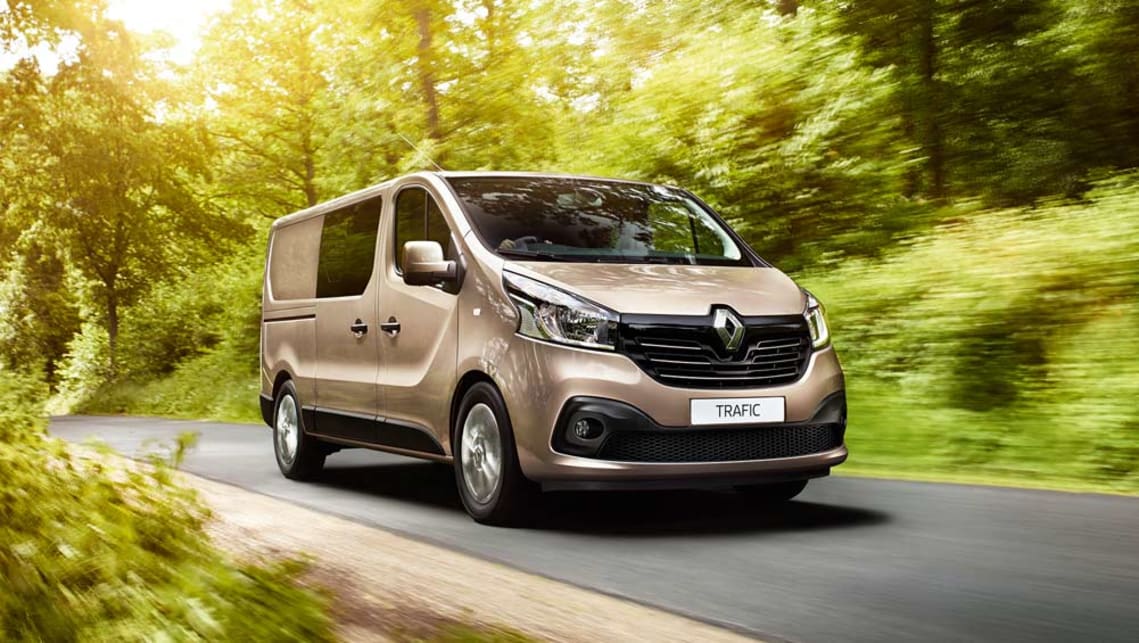
2017 Renault Trafic Crew goes dual-purpose


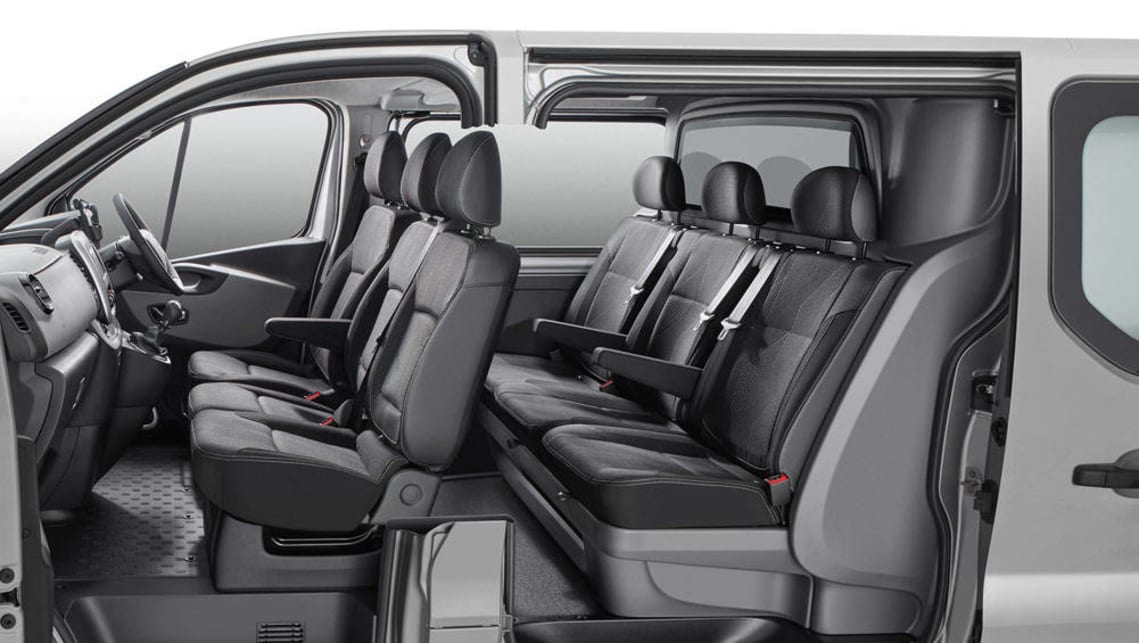
Renault has given its tradie-trusted Trafic van a more family-friendly feel with a second row of seats that takes the new Crew variant capacity to six occupants including the driver, while leaving 4.0 cubic metres of cargo volume in the back and a 1060kg maximum payload.


The new version is based on the 103kW twin-turbo 1.6-litre diesel long-wheelbase Trafic but adds a second row of three individual seats with full three-point belts at a cost of 2.0 cubic meters of load bay volume for $42,990 before on-road costs – an increase of $3500 over the equivalent three-seater.
In addition to all of the three-seater’s gear, the Crew gets glazed sliding doors for second row occupants, a glazed bulkhead behind the extra seats, a pair of 49-litre storage boxes with extra pockets, a 12-volt socket and interior finishing to match the front row.
The French maker is offering an equipment-boosted Premium Pack for the base Crew that adds 17-inch alloy wheels, body-coloured bumpers and exterior mirrors, as well as deadlocks, an 800-amp battery, upgraded multimedia system with 7.0-inch touchscreen, navigation and Arkamys stereo and heated driver’s seat.
Like higher-grade versions of the Trafic van, the $2490 Premium package also adds the ‘mobile office’ features that include a tablet holder and premium dashboard with laptop storage, but not the folding middle seat that converts into a desktop.
The Renault Trafic has been a great seller for Renault in Australia.
At the top of the Trafic Crew pile, a Lifestyle variant adds opening windows for the rear passengers, chrome grille highlights, a gloss black badge surround, a hands-free entry card (as found in many Renault passenger cars) and automatic climate control for $46,780.
With the extra seating and reduced load area, Crew variants can still accommodate items measuring up to 2423mm long, 1662mm wide and 1387mm in height.
All versions are sold with a standard six-speed manual gearbox with no automatic option at this stage, as is the case with the more strictly commercial van variants.
At the launch of the Trafic in May 2015, Renault said it would “work towards” an auto option, but the company is yet to reveal if it is making progress with an automatic that would doubtless appeal to a broader audience in Australia.
Despite its self-serve transmission, the Trafic performed well in the 2.5 to 3.5 tonne van segment during 2016, finding 1730 buyers and sitting in fourth place behind the Toyota HiAce (7478), Hyundai iLoad (5467), and Volkswagen’s Transporter that finished last year with a tally of 1960 sales.
Renault light commercial vehicles senior model line manager Lyndon Healey said the company had been pleased with the Trafic since its introduction, and the new Crew options would further broaden its appeal.
“The Trafic has been a great seller for Renault in Australia,” he said. “The Trafic Crew brings another level of functionality to what is already a highly capable and increasingly popular alternative to more mainstream mid-size van offerings."
Article source: https://www.carsguide.com.au/car-news/2017-renault-trafic-crew-goes-dual-purpose-51468

Tuesday, 29 August 2017

We Review The Snazzy, Savvy Renault Sandero


Renault’s popular Renault Sandero and Stepway received makeover in 2017 comprising design tweaks and interior enhancement.
The facelifted models formed part of a range revision for the automaker.
Leading the line-up is its flagship Stepway Dynamique, followed by the Stepway Expression (which replaced the current Sandero Dynamique) and entry-level New Sandero Expression.
Engine
Engines remained the same as the outgoing models, with all variants powered by a 66kW/135kW 900cc three-cylinder, 900cc (1.0-litre in Renault speak) turbo petrol mated to a manual five-speed (no auto available in the new range). Fuel consumption is rated a at a claimed 5.2-litres/100km for the entry-level Sandero and 5.4-litres/100km for the Stepway, with emissions of 119g/km and 124g/km, respectively.
Driving it
The Sandero Stepway manages to find that sweet spot between affordable family car and practical crossover. Driving it couldn’t be simpler; acceleration is even, gear shifts smooth and there’s torque when you need it.
It handles adequately in corners though body roll is noticeable and while understeer is present, it’s manageable provided you avoid spirited driving. It makes for a great family car, but owners should be mindful of additional weight (road-trip luggage, sports kit for the kids etc) limiting its performance.
These are not performance hatchbacks; buyers need to play to the Sandero/Stepway's strengths - a comfortable ride with adequate power.
Overall, its drive can best be described as “adequate” and that's not necessarily a bad thing. It means it has met the criteria for a budget family crossover by delivering a comfortable ride that’s not easily unsettled on irregular surfaces and judging by its safety systems (ABS, front and side airbags), will keep your family safe on our roads.
Design tweaks
At the front, the Sandero and Stepway display the automaker’s new design identity with headlights and grill borrowed from its Megane and Clio siblings. The headlights incorporate the characteristic C-shape Daytime Running Lights (LED), plus C-shape rear lights and both the front and rear bumpers are of new design.
The Stepway sports an integrated roof spoiler, higher ground clearance than the entry Sandero Expression, roof bars, front and rear skid plates, wheel arch mouldings and fog lights.
The Sandero is fitted with 15” wheels while the Stepway receives 16” dark metal variants.
New centre console
Inside, both models gain a new centre console, new air vents, updated trims, seat upholstery and power window switches on door panels.
The facelifted models gain a new steering wheel, now with hooter in the middle and one-touch indicators.
Luggage space is rated at 292 litres can be further improved upon thanks to the split rear bench. The New Stepway Dynamique has a centre armrest for extra comfort and leather seats as an option.
Improved tech
Many of the features and fitments which come standard with the new Sandero range are not seen in this vehicle segment. These include:
Standard features include side-airbags, front and rear power windows, power side-mirrors, leather steering wheel and gear knob and rear park assist. Cruise control and satnav are also standard while leather seats are an option.
The New Stepway Dynamique is fitted Renault MediaNav - an integrated multimedia system with 7” touchscreen.
In teams of safety, Renault says its refreshed Sandero is the only car in its class to include EBA (coupled with ABS) and ESP (+ ASR) as standard. Passive safety features. Also unique to this segment are front side airbags for the Stepway Dynamique.
The ABS now comes with EBA which kicks in and automatically applies maximum brake pressure when emergency braking conditions are detected; interesting fact, only 60% of drivers brake sufficiently hard for the ABS system to switch on in an emergency situation.
Renault says: “40% of road deaths are as a result of accidents that involve loss of control over the vehicle. ESP ensures vehicle stability and assists the driver to avoid possible loss of control; detects and reduces loss of traction (on slippery road surfaces, for example) and reduces engine power and brakes on independent wheels in the event of loss of control.”
Hill Start Assist (HSA)
HSA is automatically activated (upon complete stop) as soon as an incline of at least 10% is detected. The revised Sandero and Stepway range are sold with a 5-year or 150 000km warranty and to a two-year or 30 000km service plan. Service intervals are 15 000km.
What about parts? Renault said: “New Sandero parts are very competitively priced and Renault’s Gauteng-based Parts & Distribution ensures that parts availability is running at 95% plus.”
Overall
I enjoyed both the second-generation Renault Sandero and Stepway when they first arrived in SA back in 2014 and the 2017 facelift builds on its predecessors with eye-catching design tweaks and interior enhancements. It’s priced aggressively and well worth considering over its competitors.  
If you’re looking for an affordable, practical and safe family vehicle, the new Sandero and Stepway might be for you. They're both packed with creature comforts and a host of safety features even if the ride isn’t too stimulating.

Original Article from: http://www.wheels24.co.za/NewModels/revised-refreshed-renaults-we-drive-facelifted-sandero-stepway-in-joburg-20170310

Thursday, 4 May 2017

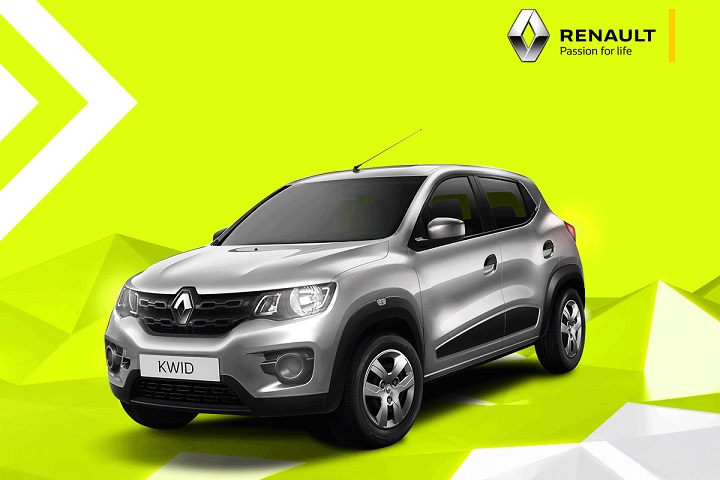
The new Renault Kwid is what you’ve been waiting for

Renault cars include passenger, sport and light commercial vehicles. The Renault Kwid is one of Renault’s exciting new offerings. True to their motto “Passion for Life” the KWID supports you in living life to the fullest. Designed to support your busy lifestyle, these Renault cars for sale boast plenty of useful features.
Image Source: Renault South Africa Website.

Exterior and Interior design of the new Renault Kwid

The Renault KWID is now available in South Africa in two trim levels. This new exciting release is offered at a bargain price. Its spacious cabin and excellent fuel consumption are other reasons to find a Renault KWID for sale. This latest entry-level competitor has styling elements of a SUV. The extended height of its frame and black plastic mouldings incorporate components similar to that of an SUV.
The plastic mouldings reduce the risk of scratches to the car’s exterior. The Renault KWID has an extended wheelbase of 2422mm. The 180mm ground clearance makes it easy to tackle challenges in a KWID. It has a higher frame when compared to other models in its class. The height of the KWID is 180 mm. Its short overhangs and windshield design create additional room in the cabin.
The 300 litre luggage compartment provides plenty of storage space. Useful storage options include open storage in front of the passenger seat as well as a lower glove box. It has door storage which includes a 1 litre bottle holder. The rear parcel tray is another handy storage space.

The Kwid’s performance and specifications

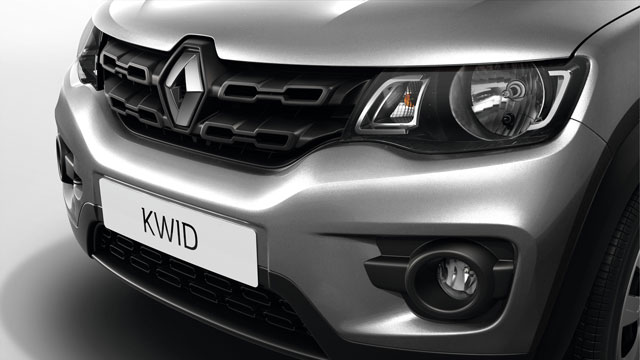
The KWID is equipped with a Smart Control efficiency engine which offers a precise air to fuel ratio assessment. The SCe is just one of the factors that makes the Renault KWID for sale a pleasurable ride. The knock sensor contributes to the excellent fuel consumption of this vehicle. Its suspension is designed to offer excellent ride quality and it also contributes to safety. It has a manual 5-speed transmission.
Image Source: Renault South Africa Website.
Not only is buying one of these Renault cars a cost-effective option, running one of these vehicles is affordable too. With a fuel consumption of 4.71 l/100 km, getting around the city will cost you less. For more details on the Renault Kwid’s specifications, take a look at the table below.

Kwid Model
Renault Kwid
Expression and Dynamique
Engine Type
Indirect injection
Capacity (cc)
999
Power (kW @ rpm)
50 @ 5500
Torque (Nm @ rpm)
91 @ 4250
Fuel Tank Capacity (l)
28
CO2 Emissions mixed cycle (g/km)
112
Acceleration speed (0-100 kph) (s)
16.8
Top Speed (kph)
155


Tech and luxury features in the Kwid

The Renault KWID is designed to offer motorists a comfortable ride. Commuting in this vehicle ensures that you arrive at your destination feeling relaxed. Electric power steering makes manoeuvring in an urban setting easier. Air conditioning helps to keep the cabin at a pleasant temperature even during the hot summer months. Electric front windows are a convenient feature of this model.
Image Source: Renault South Africa Website.
Height adjustable front seats help the driver to customise their vehicle to meet their requirements. The digital instrument cluster allows the driver to view important information at a glance. The Dynamique version boasts a MediaNav multimedia system. A highlight of the system in these Renault cars is its 18cm touchscreen display. It also offers excellent connectivity.
Smart technology makes it easy to explore without getting lost. The innovative MediaNav Multimedia System offers navigation as well as audio streaming. Another highlight of this system is its speeds sensing volume regulation.
The Renault Kwid’s safety features
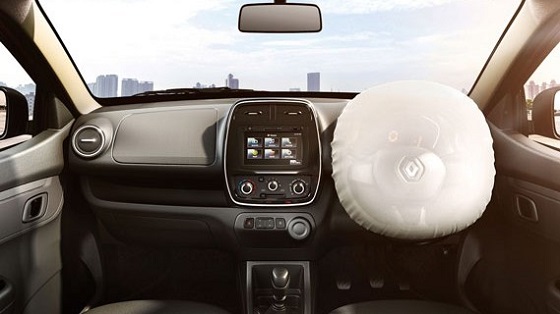
The Renault KWID for sale has been designed with your safety in mind. The Pro-Sense front seat belt helps to keep the driver safe if a collision occurs. An airbag is another safety measure which has been designed to protect the driver. The central locking system safeguards the vehicle against theft while serving as a convenient feature of this model. Front disc brakes enable the KWID to handle challenging road conditions with confidence. The high mount stop lamp contributes to the safety of this vehicle. An audible parking brake warning offers additional protection.
Image Source: Renault South Africa Website.
When compared to the Cherry QQ3, the KWID is more expensive but it offers a higher engine power when compared to the maximum power of 38 kW of the Cherry’s 800cc engine. The 1.1 litre QQ3 TXE delivers a similar performance to the KWID.
When it comes to finding Renault cars for sale, Auto Mart is the best place to shop. Create alerts, browse various Renault cars and find a find affordable options online today.
Article source: http://blog.automart.co.za/2016/12/12/the-new-renault-kwid-is-what-youve-been-waiting-for/

Tuesday, 2 May 2017

An All New Renault Clio

The latest Renault Clio for sale is not to be trifled with. The Fourth generation Renault Clio has been revamped with new engines, some design changes and a wide range of new creature comforts. Other hatchback manufacturers should be cautious as this car might just take South Africa’s favourite hatchback title in 2016. There is also a new Renault Clio GT line that has been introduced this year. This model aims to make a sporty Clio that won’t cost you as much as the RenaultSport but it will give you a better driving experience.

The inside is seductively French
Inside the Clio is a much improved cabin that oozes French flair. You are met with black gloss upholstery and soft finishes. An aeroplane wing design has been used for the dashboard which has very accessible panels, a new digital speedometer and adjustable steering columns and head rests.
You will get a host of convenience like cup holders and door storage panels. There’s a 1/3-2/3 splitfold bench in every Clio and a category leading boot capacity of 300dm³.
There are three normal trim levels which have been named Authentique, Expression and Dynamique. Renault Clio has also introduced a new Renault Clio GT line which we will discuss later in the article.
The standard trim level is the Authentique trim. All classes have what this trim level has which include electronic stability control (ESC), anti-lock brakes, hill-start assistance, cruise control, AUX ports with Bluetooth and USB ports too.
The Expression has a Clio 18cm Touch screen with a special multimedia system that makes use of satellite navigation, USB, Bluetooth and allows for audio streaming. The Expression comes with fog lights, sixteen inch alloy wheels, leather on the interior gear shift and gear lever.
The top end Clio model, the Dynamique, comes with a wide range of handy features like a hands free keycard, power windows, light sensors and auto rain sensors. There are seventeen inch alloys with black/chrome interior and exterior styling. As optional extras, you can get auto climate control, rear parking sensors and a fixed sunroof.

The outside is dripping with flair
The Renault Clio for sale is of course only available in a five door configuration. The gorgeous body is wider, longer and has a much longer wheel base than the Clio predecessors. The handles on the doors are integrated into the panels themselves and the very small rear quarter windows melt seamlessly into the sleek look of the new Renault Clio. The car has a very shapely profile with chrome trim on the grille and stylish front and rear bumpers.

The purr of the new Renault Clio
Renault has started downsizing its engine line up. The Renault Clio has a 55kW, 1.2, sixteen valve, turbo engine under its hood. This might now sound like a lot of power but if you look into the technology that has been used here, you won’t be lacking any acceleration.
When you actually drive the car, you won’t feel like you are driving a 1.2 engine. In fact the new Clio feels more powerful than the old one, even though the engine is smaller. 55kW of power will produce 107 Nm of torque with a very impressive fuel consumption of just 5.5 litre per 100 kilometres and a 0 to 100 kilometre per hour in just 15.4 seconds. Your top speed is a healthy 167 kilometre per hour.
Then you also have a choice of two other engine variants, the 66kW Turbo and the 88kW Turbo EDC. The 66kW Turbo has a top speed of 182 Km per hour and a 0-100 km/h time of 12.2 seconds. The 88kW Turbo EDC has a top speed of 199 kilometres per hour and this engine variant will get you from standing still to 100 kilometres per hour in just 9.4 seconds.

Safety in the Renault Clio for sale

The Clio has a five star rating and a Euro Ncap best-in-class status. All Clio’s have ESP, ASR traction control, ABS, EBD and EBA. The steering wheel is electronically varied and there is a speed limited cruise control function.
The Clio has two airbags in the front and two in the back with pre-tensioned seatbelts and load limiters.

Renault Clio Blaze Limited Edition

The Blaze is a limited edition form of the new Renault Clio. The Blaze features colour coded mirrors with LED driving lights and fancy Blaze badges on the vehicle. The engine is the same 66kW Turbo Petrol Engine and the interior gets the same colour coded treatment as the outside of the car. The steering wheel, air vents, door panels and gear gaiter are all colour coded.
In terms of technology, the Blaze comes with new Renault Bass Reflex® sound system which has acoustic nozzles and indoor integrated speakers and a massive 30 litre sub-woofer. You will also get the MediaNav® Just Touch system which is Renault’s onboard touch screen tablet that operates as navigation, radio, Bluetooth integration and a telephone.

Renault Clio GT line

As we mentioned before, the Clio GT is for those who want more from their Clio but aren’t willing to fork out the cash for a RenaultSport.
So what’s the different between the GT and the regular Clio? Let’s start with the dazzling GT blur paint that comes with the Clio GT and the stunning seventeen inch rims with a much more aggressive looking front end bumper. The GT has its LED lights closer to the bottom edge of the car, the GT gets a rear diffuser and there is a shiny chrome tip on the exhausts. Lastly, you will find scuff plates and the body kit from the RenaultSport. This particular Turbo Petrol Engine claims to be the best compromise between driving enjoyment and fuel economy on the market.
In terms of more performance, the engine has been tweaked a bit. There isn’t much of a speed change but the economy tweaks are very evident. The engine has been given an over boost function which increases the performance in the 2nd and third gears but 4 extra kW and 15Nm of extra torque. This results in a 40 second drop in 0 to 100 kilometres per hour from the standard Renault Clio.
Feature wise the Renault Clio GT line is jam packed. Very few cars in the same class as the GT can even come close to the price you pay for the features you get. The GT has all of the things you would expect from a top end sports car; there’s a speed limiter, cruise control, satellite navigation. Auto wipers that have rain sensors, an infotainment system with touchscreen functionality, and head lights that also have sensors to detect if its dark or not, hands free car access and starter. Then you get all the same safety features that the regular Clio has like EBD, ASC, ABS and airbags.

Renault Clio price

The prices vary quite a lot through the ranges but these are all very competitive and well within the range of the Clio’s competition.

Renault Clio Price Breakdown

Clio 55kW AuthentiqueR176 900
Clio 66kW Turbo Blaze Limited EditionR190 900
Clio 66kW Turbo ExpressionR209 900
Clio 66kW Turbo DynamiqueR229 900
Clio 66kW Turbo GT-LineR236 900
Clio 88kW Turbo EDC ExpressionR249 900
Feel true French flair in a new Renault Clio and make a bold impression wherever you go. Experience the wide range of features that have been loaded into the Renault Clio for sale. If the Clio isn’t enough for you then have a look at a Renault Clio Blaze or the Renault Clio GT line. Browse through Auto Mart’s extensive collection of online vehicles and find a Renault Clio today.

Article source: http://blog.automart.co.za/2016/03/15/an-all-new-renault-clio/